Power over Ethernet: PoE, PoE+ and PoE++ Standards
PoE standards compared: 802.3af, 802.3at and 802.3bt power at the port and device, injectors vs switches, and the right cable for high-power PoE.
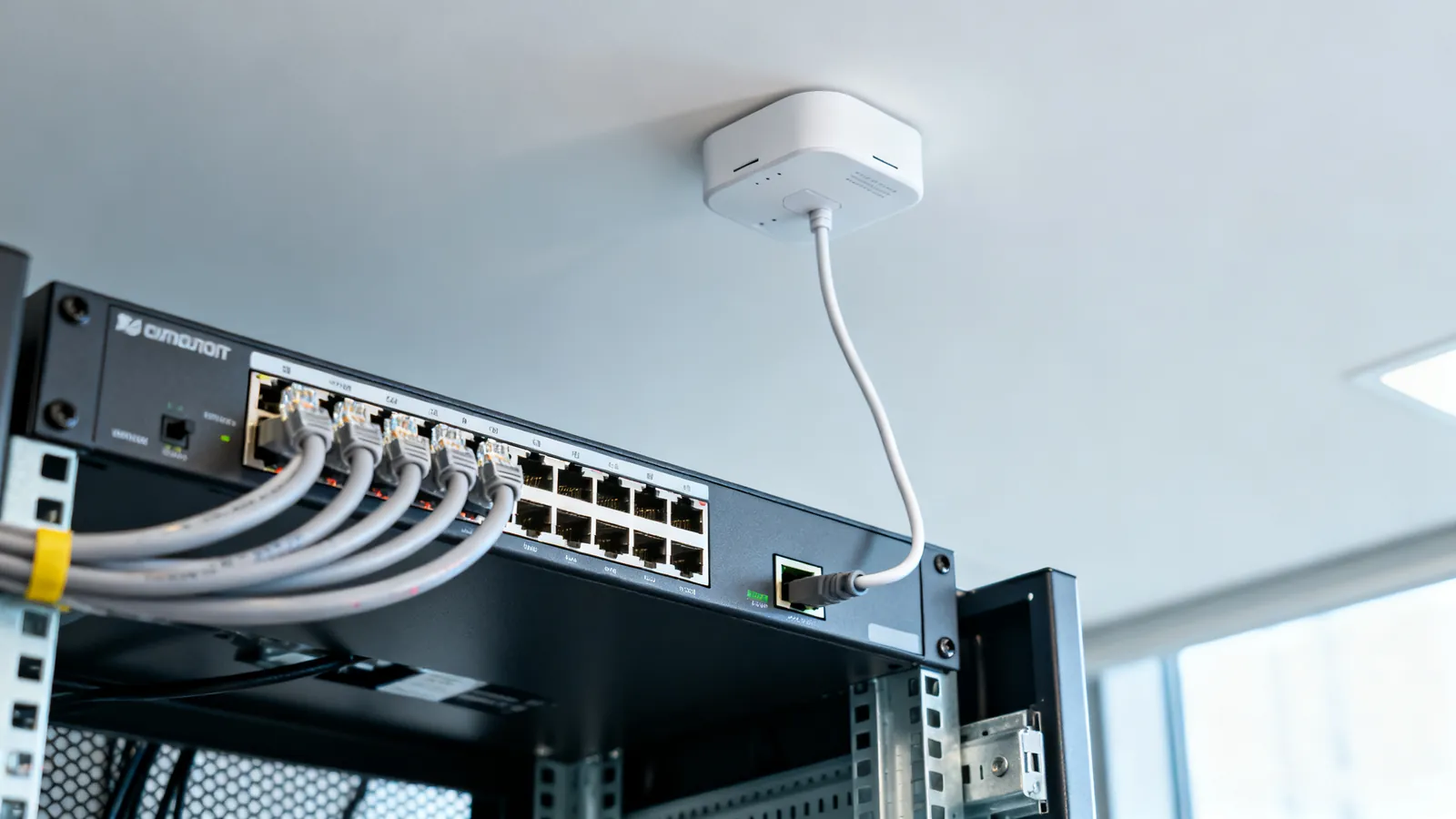
Power over Ethernet delivers DC power and data over the same twisted-pair cable. The IEEE 802.3 standards define three generations: 802.3af (PoE, Type 1), 802.3at (PoE+, Type 2) and 802.3bt (PoE++, Type 3 and Type 4). Each sets a power level at the switch port and a lower guaranteed level at the powered device, because the cable itself loses energy as heat. Choosing the right standard, switch and cable is what makes a link work reliably.
The three PoE standards and their power levels
| Standard | Type | Power at port | Power at device | Voltage range | Pairs used |
|---|---|---|---|---|---|
| 802.3af (PoE) | Type 1 | 15.4 W | 12.95 W | 44–57 V | Two |
| 802.3at (PoE+) | Type 2 | 30 W | 25.5 W | 50–57 V | Two |
| 802.3bt (PoE++) | Type 3 | 60 W | 51 W | — | Four |
| 802.3bt (PoE++) | Type 4 | 90 W | 71.3 W | — | Four |
802.3af arrived in 2003 and covers most VoIP phones, simple IP cameras and wireless access points. 802.3at, from 2009, roughly doubles the port budget and suits pan-tilt-zoom cameras, dual-radio access points and video phones. 802.3bt, from 2018, uses all four pairs and reaches 60 W or 90 W at the port, enough for high-power access points, small displays and building controls.
The difference between port and device figures is not marketing margin. It is the worst-case loss allowed in the channel at full current. A device rated at 25.5 W on an 802.3at link can draw that continuously; the switch must budget 30 W for it.
How to size a PoE switch
A PoE switch has a total power budget shared across its ports. Each port may be capable of 30 W, but the switch as a whole might supply only enough for a few such devices at once. Add the device draw figures, not the port maximums, then leave headroom for startup surges.
A PoE injector adds power to one link from a non-PoE switch. It sits between the switch and the device and injects power onto the spare pairs or the data pairs. A PoE switch powers its ports directly and negotiates with each device. For one or two devices, an injector is simpler; for a wall of cameras or access points, a PoE switch is cleaner and easier to manage.
Passive (non-standard) injectors are the trap. They skip the negotiation and put 24 V or 48 V on the cable continuously. A device that does not expect that voltage can be damaged. Use passive injectors only with equipment explicitly designed for them.
Cable choice for high-power PoE
PoE keeps the 100 m (328 ft) Ethernet limit, so the same maximum Ethernet cable length rules apply. What changes with higher power is heat. Bundled cables carrying current warm up, and thinner conductors warm more.
- 23 AWG Cat6 or Cat6a copper runs cooler than thinner cable.
- Cat5e is commonly 24 AWG and works for 802.3af and 802.3at, but for 802.3bt Type 4 the larger conductor is the safer choice.
- Copper-clad aluminium (CCA) should never carry PoE. It has higher resistance, is brittle when flexed, and produces more heat under load.
- Solid copper is for horizontal runs; stranded copper is for patch cords that flex.
The Ethernet cable categories page covers the full range from Cat5e to Cat8. For most PoE work, Cat5e vs Cat6 vs Cat6a comes down to heat, headroom and future speed, not to whether PoE will work at all.
What goes wrong
Passive injectors on the wrong device. A passive 48 V injector on a device expecting 802.3af negotiation can destroy the device’s input. If the device does not say it accepts passive PoE, do not use a passive injector.
Undersized switch budget. A switch with a 60 W total budget cannot run four 30 W ports at full load. It will either refuse to power the fourth device or drop all of them. Add the device draws and compare with the switch’s total, not its per-port figure.
CCA cable under PoE. Copper-clad aluminium does not meet TIA category standards. Under PoE it runs hotter and can fail at the connector. Category cable is solid or stranded copper.
Long runs at high power. The 100 m limit is set by signal loss and timing, and PoE does not extend it. A 90 m run at 90 W loses more energy in the cable than a short one, and the device may see less than its rated voltage. Keep runs within the channel limit and prefer 23 AWG for Type 4.
Broken or ungrounded shields. A shielded system needs shielded jacks, plugs and patch panels, and grounding through the equipment. A shield that is broken or not grounded gives no benefit and can pick up noise.
Mixing up pairs. 802.3af and 802.3at use two pairs; 802.3bt uses all four. A cable with a split pair or a bad termination may pass data at low speed but fail under PoE current. A continuity tester finds opens and shorts; a certification tester is the only way to prove a link meets Cat6 or Cat6a limits.
Matching the standard to the device
Check the device label or datasheet for its PoE class. A device marked 802.3af will run from an 802.3at or 802.3bt port, because the higher standard is backward compatible. A device marked 802.3bt Type 4 needs a Type 4 port or a Type 4 injector; a Type 1 port will not power it.
For a single access point on a desk, a PoE+ injector and a Cat6 patch cord are enough. For a ceiling full of cameras, a PoE+ switch with a realistic budget and Cat6 horizontal cabling is the practical answer. For 90 W devices, use 802.3bt Type 4, 23 AWG copper, and keep the runs short.
Common questions
What is the difference between 802.3af and 802.3at?
802.3af (PoE, Type 1) supplies 15.4 W at the switch port and 12.95 W at the device. 802.3at (PoE+, Type 2) supplies 30 W at the port and 25.5 W at the device. 802.3at also raises the voltage range to 50–57 V and is backward compatible with 802.3af devices.
What is PoE++ 802.3bt?
802.3bt is the 2018 standard for higher-power PoE. Type 3 delivers 60 W at the port and 51 W at the device; Type 4 delivers 90 W at the port and 71.3 W at the device. It uses all four pairs of the cable, where 802.3af and 802.3at use two.
PoE injector vs PoE switch: which should I use?
A PoE injector adds power to one link from a non-PoE switch, which suits one or two devices. A PoE switch powers its ports directly and negotiates with each device, which is cleaner for many devices. Passive injectors skip negotiation and can damage devices that do not expect them.
What is the best cable for PoE?
Solid or stranded copper, never copper-clad aluminium. For 802.3af and 802.3at, Cat5e or Cat6 works. For 802.3bt Type 4, 23 AWG Cat6 or Cat6a runs cooler and is the safer choice. PoE keeps the 100 m (328 ft) Ethernet limit.
Does PoE work over Cat5e?
Yes. Cat5e supports 802.3af and 802.3at. For 802.3bt Type 4 at 90 W, the larger 23 AWG conductor of Cat6 or Cat6a is preferred because it produces less heat under load.
Read next
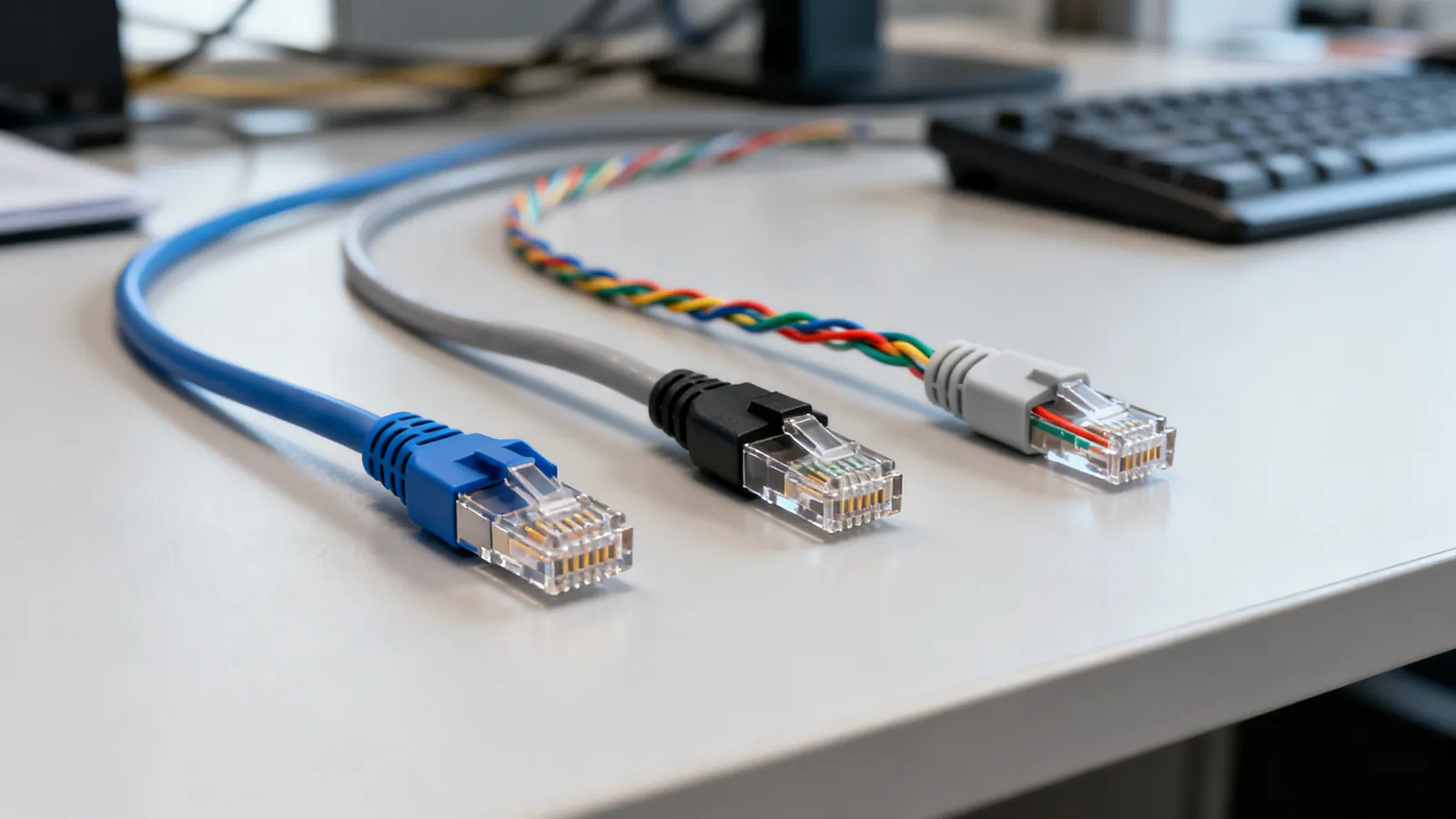
Cat5e vs Cat6 vs Cat6a: Which Ethernet Cable to Buy
Cat5e, Cat6 and Cat6a compared: bandwidth, 10 Gbps reach, shielding and when each category is the right choice for home or office cabling.
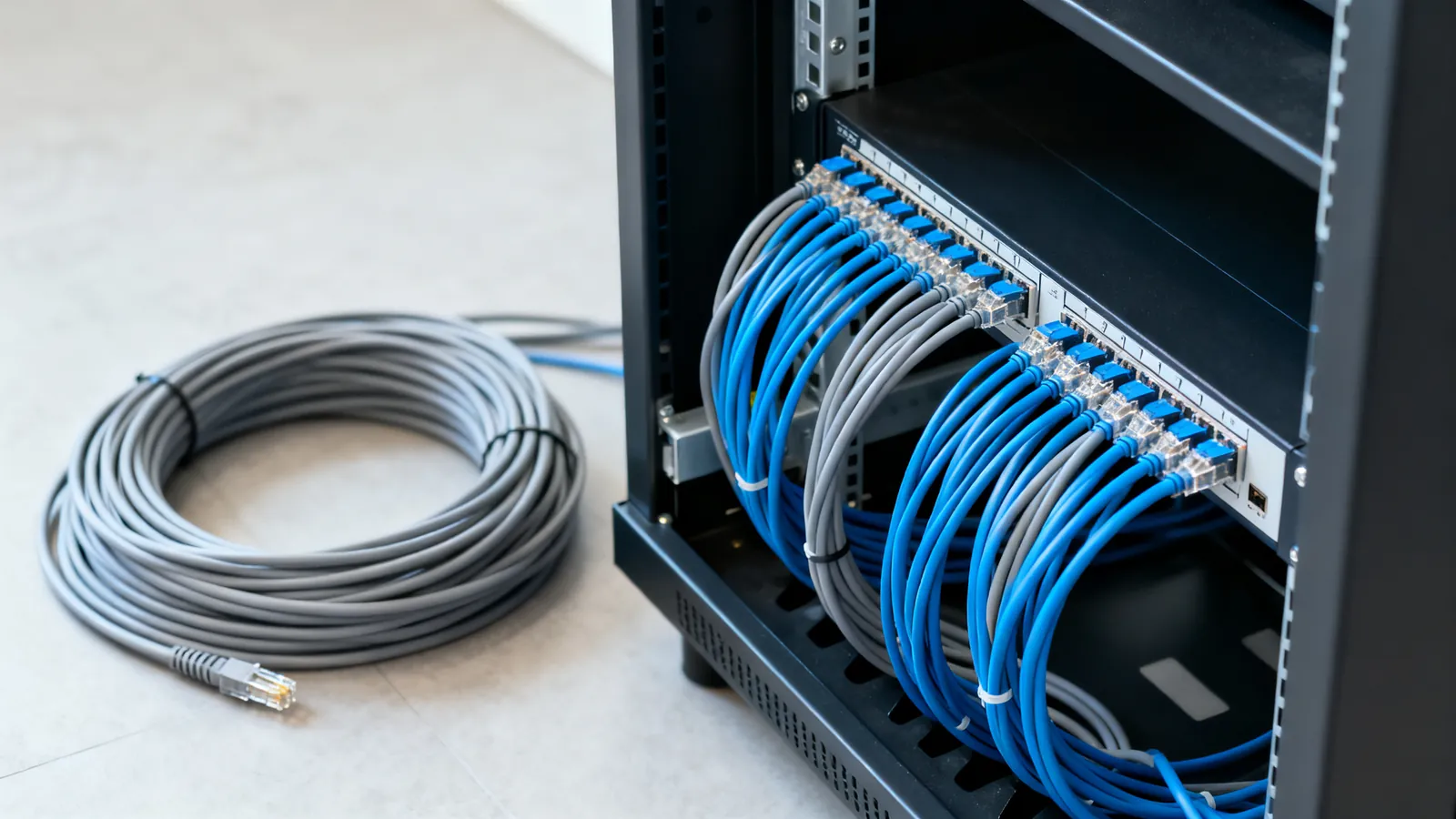
Cat7 and Cat8 Cables: What They Are and Who Needs Them
Cat7 is ISO-only with GG45 or TERA connectors; Cat8 is a 30 m data-centre cable. Learn what each standard says and what to buy for home or office.
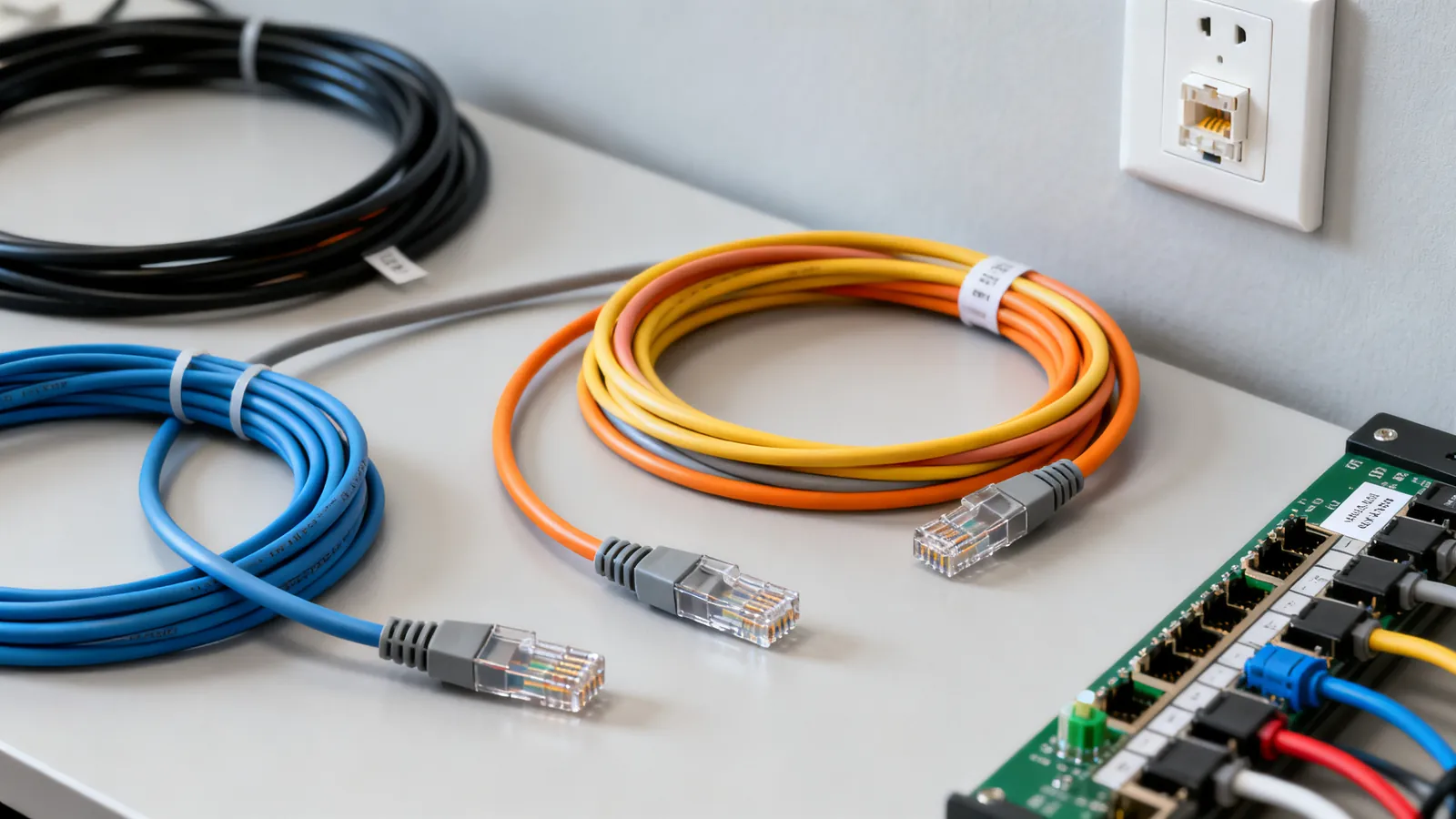
Ethernet Cable Categories: Cat5e to Cat8
Ethernet cable categories compared: Cat5e, Cat6, Cat6a, Cat7 and Cat8 rated frequency, speed and distance, plus which to buy for home, office and 10 Gbps.