BNC Connectors and SDI Video Cables: 50 vs 75 Ohm
BNC connectors come in 50 and 75 ohm versions. Learn which to use for SDI video, CCTV and test gear, the SDI data rates, and how to convert BNC to RCA.
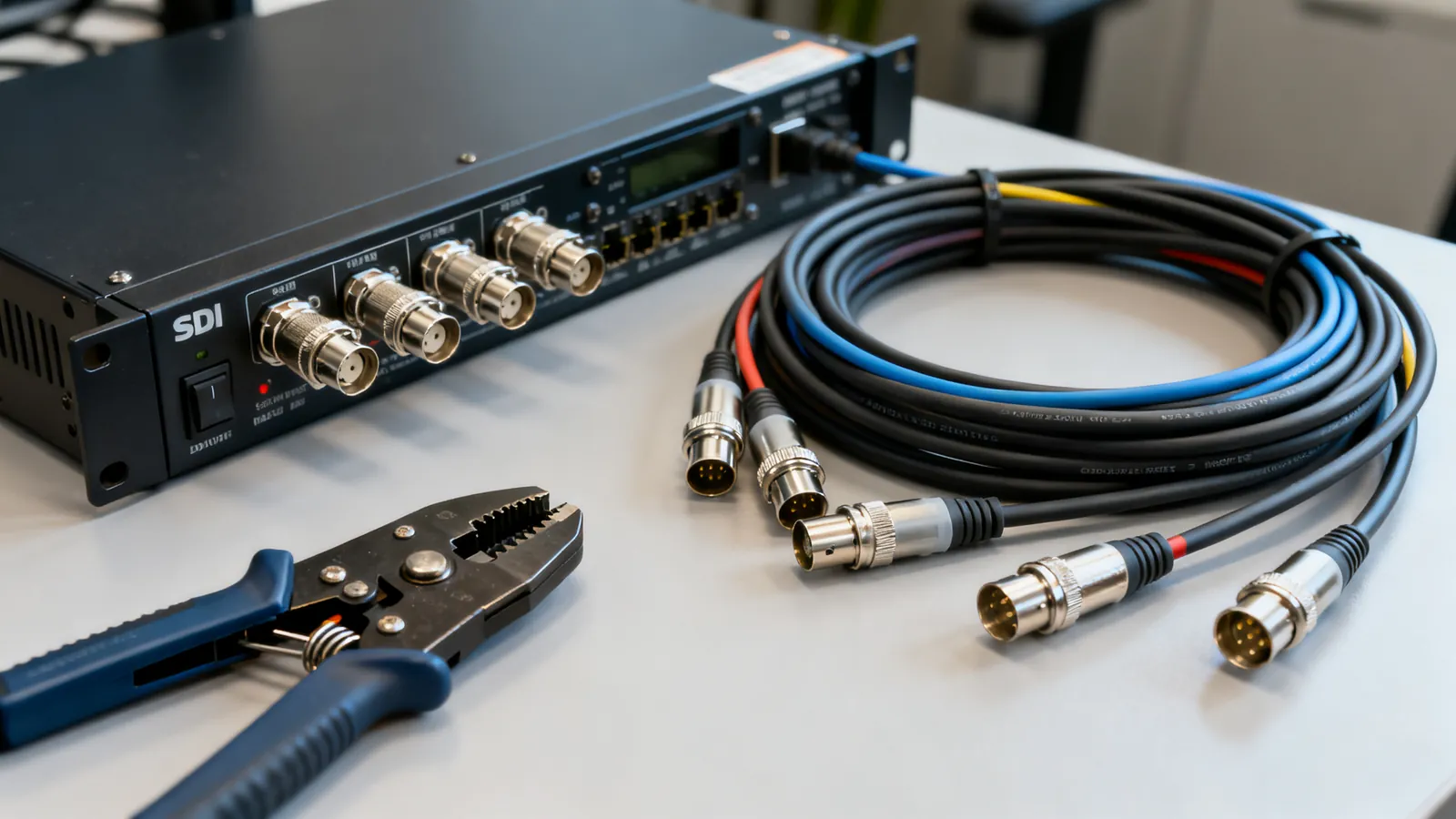
A BNC connector is a bayonet-lock coaxial connector used for video, radio and test equipment. It comes in two impedances: 50 ohm for radio and test gear, and 75 ohm for video, including SDI and analogue CCTV. They mate mechanically, but the impedance mismatch matters at high frequencies. For any SDI run, use 75 ohm BNC connectors and 75 ohm coax.
The two BNC impedances
BNC stands for Bayonet Neill–Concelman, named after its bayonet locking mechanism and its designers. The connector body is metal, the centre contact is a pin, and a quarter-turn locks it in place. That locking action makes it more secure than a push-on RCA plug, which is why it dominates professional video and test equipment.
The two versions look identical and will physically connect to each other. The difference is the impedance of the connector and the cable it is designed for.
| Type | Impedance | Typical use | Cable examples |
|---|---|---|---|
| 50 ohm BNC | 50 ohm | Radio, test equipment, lab gear | RG58 |
| 75 ohm BNC | 75 ohm | Video, SDI, analogue CCTV, broadcast | RG6, RG59 |
Mating a 50 ohm BNC to a 75 ohm BNC works for low-frequency signals, but at video frequencies and above the mismatch causes signal reflection and loss. For SDI, always use 75 ohm connectors and 75 ohm cable end to end.
SDI rates and what each carries
SDI (Serial Digital Interface) is a professional video standard that runs on 75 ohm coax. It carries uncompressed digital video and embedded audio. The rate determines the resolution and frame rate the cable can carry.
| Standard | Bit rate | Typical payload |
|---|---|---|
| SD-SDI | 270 Mbps | Standard definition |
| HD-SDI | 1.485 Gbps | 720p, 1080i |
| 3G-SDI | 2.97 Gbps | 1080p at 60 Hz |
| 6G-SDI | 5.94 Gbps | 4K at 30 Hz |
| 12G-SDI | 11.88 Gbps | 4K at 60 Hz |
Higher rates travel shorter distances on the same cable. A cable that carries 3G-SDI for a long run may only carry 12G-SDI for a shorter one. For 12G-SDI, use a cable rated for that rate and keep the run as short as the equipment allows. The exact distance depends on the cable and the transmitter, so check the cable’s specification rather than assuming a fixed number.
SDI uses the same 75 ohm coax as analogue video, but the signal is digital. A cable that worked for analogue CCTV may not carry 12G-SDI over the same distance.
Coax for analogue CCTV and video
Analogue CCTV and older video equipment use 75 ohm coax with BNC connectors. The two common cables are RG6 and RG59. RG6 has an 18 AWG centre conductor and is the better choice for longer runs and higher frequencies. RG59 has a 20 to 22 AWG centre conductor and suits short runs and older equipment. For a detailed comparison, see RG6 vs RG59 coax cable.
For analogue video signals, composite video uses a single yellow RCA plug, while component video uses three RCA plugs (green, blue and red) for YPbPr. Both are analogue and both can be carried on 75 ohm coax. If you are working with consumer video gear, composite vs component video (RCA) explains the difference and when each is used.
BNC to RCA: adapting between connector types
A BNC to RCA adapter is a passive mechanical adapter that changes the connector type without changing the signal. It is common in CCTV and video work where a camera has a BNC output and a monitor or capture device has an RCA input.
Because both BNC (75 ohm) and RCA are used for video, a passive adapter works for analogue video and for SDI if the receiving device accepts the signal. The adapter does not change impedance; it simply joins a 75 ohm BNC to a 75 ohm RCA. For digital SDI, the receiving device must be able to handle the SDI rate; an RCA input on a consumer TV will not accept an SDI signal.
Use a 75 ohm BNC to RCA adapter for video. A 50 ohm BNC to RCA adapter is intended for other applications and will cause a mismatch on video.
Choosing cable and connectors for SDI
For SDI, the cable and the connectors must both be 75 ohm. The cable should be rated for the SDI rate you intend to carry. Broadcast installations often use RG6 or a dedicated SDI cable with a solid centre conductor and a foil-and-braid shield.
BNC connectors for SDI come in crimp and compression styles. Crimp connectors require a crimp tool and are common in broadcast. Compression connectors use a compression tool and are common in CCTV. Both work if installed correctly. The centre pin must be clean and the shield must make good contact.
For short patch runs in a rack, pre-made BNC cables are available in specific lengths and rates. For permanent installs, cut the cable to length and terminate both ends with 75 ohm BNC connectors.
What goes wrong
Using 50 ohm BNC on video. A 50 ohm connector on 75 ohm cable creates a mismatch. At SDI rates this causes reflections and can drop the signal. Use 75 ohm connectors for all video work.
Mixing cable types. A cable with a 75 ohm connector but 50 ohm cable (or the reverse) will not perform as a 75 ohm line. Check the cable marking.
Assuming any coax will carry 12G-SDI. Higher SDI rates need cable rated for those rates. A long run of older or thinner coax may work for SD-SDI but fail at 12G-SDI.
Poor termination. A stray shield strand touching the centre pin, or a loose centre pin, causes loss or a short. Inspect the connector after termination.
Using the wrong adapter. A BNC to RCA adapter is passive and works for analogue video. It will not convert an SDI signal to a format a consumer RCA input can display.
Ignoring impedance in test gear. Test equipment often uses 50 ohm BNC. Connecting 75 ohm video cable directly to a 50 ohm input causes a mismatch; use a 75 ohm feed-through terminator or a matching pad if the instrument requires it.
Cable and connector summary
| Application | Impedance | Connector | Cable |
|---|---|---|---|
| SDI video (SD to 12G) | 75 ohm | 75 ohm BNC | 75 ohm coax rated for the rate |
| Analogue CCTV | 75 ohm | 75 ohm BNC | RG59 or RG6 |
| Consumer video | 75 ohm | RCA | RG59 or RG6 |
| Radio and test gear | 50 ohm | 50 ohm BNC | RG58 |
For any video signal, the rule is simple: 75 ohm BNC, 75 ohm cable, and a cable rated for the signal you are sending. That covers analogue CCTV through to 12G-SDI.
Common questions
What is the difference between 50 ohm and 75 ohm BNC connectors?
The impedance of the connector and the cable it is designed for. 50 ohm BNC is used for radio and test equipment, often with RG58 cable. 75 ohm BNC is used for video, including SDI and analogue CCTV, with RG6 or RG59 cable. They mate mechanically but a mismatch causes signal loss at high frequencies.
Can I use a 50 ohm BNC connector on a 75 ohm cable?
It will physically fit, but it creates an impedance mismatch. For video and SDI, this causes reflections and can degrade or drop the signal. Always use 75 ohm BNC connectors on 75 ohm video cable.
What is the difference between 3G-SDI and 12G-SDI?
3G-SDI runs at 2.97 Gbps and typically carries 1080p at 60 Hz. 12G-SDI runs at 11.88 Gbps and carries 4K at 60 Hz. Higher rates need cable rated for that rate and generally travel shorter distances on the same cable.
Will a BNC to RCA adapter work for SDI?
A passive BNC to RCA adapter changes the connector type but not the signal. It works for analogue video. For SDI, the receiving device must accept the SDI rate; a consumer RCA input will not display an SDI signal.
What coax cable should I use for SDI?
Use 75 ohm coax rated for the SDI rate you are carrying. RG6 is common for longer runs and higher rates. For 12G-SDI, check the cable's specification for the distance it supports at that rate.
Read next
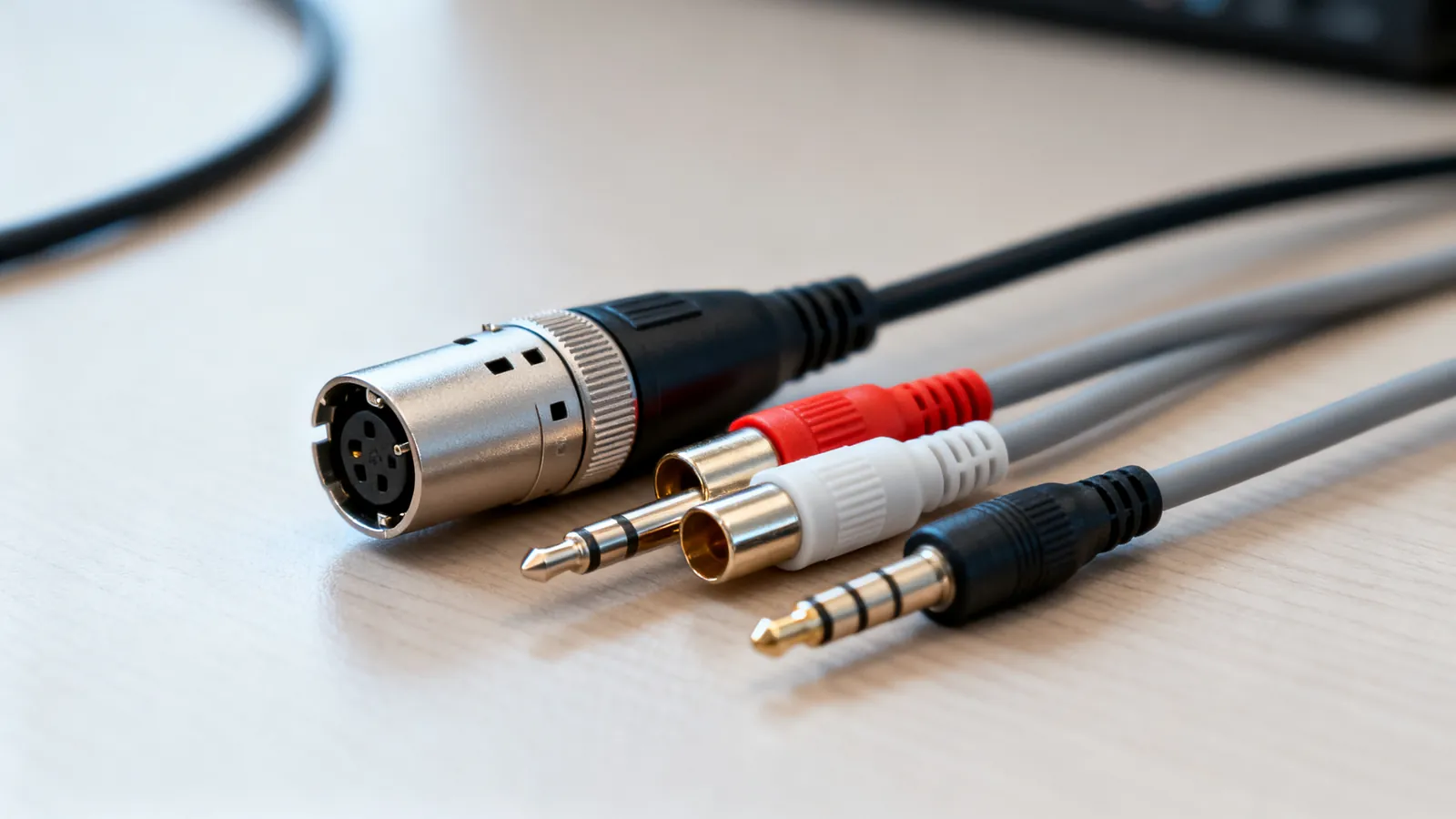
Audio Cable Types: XLR, TRS, TS, RCA and 3.5 mm
XLR, TRS, TS, RCA and 3.5 mm audio cables compared: what each carries, balanced vs unbalanced wiring, line levels, TRRS pin orders and which adapters work.
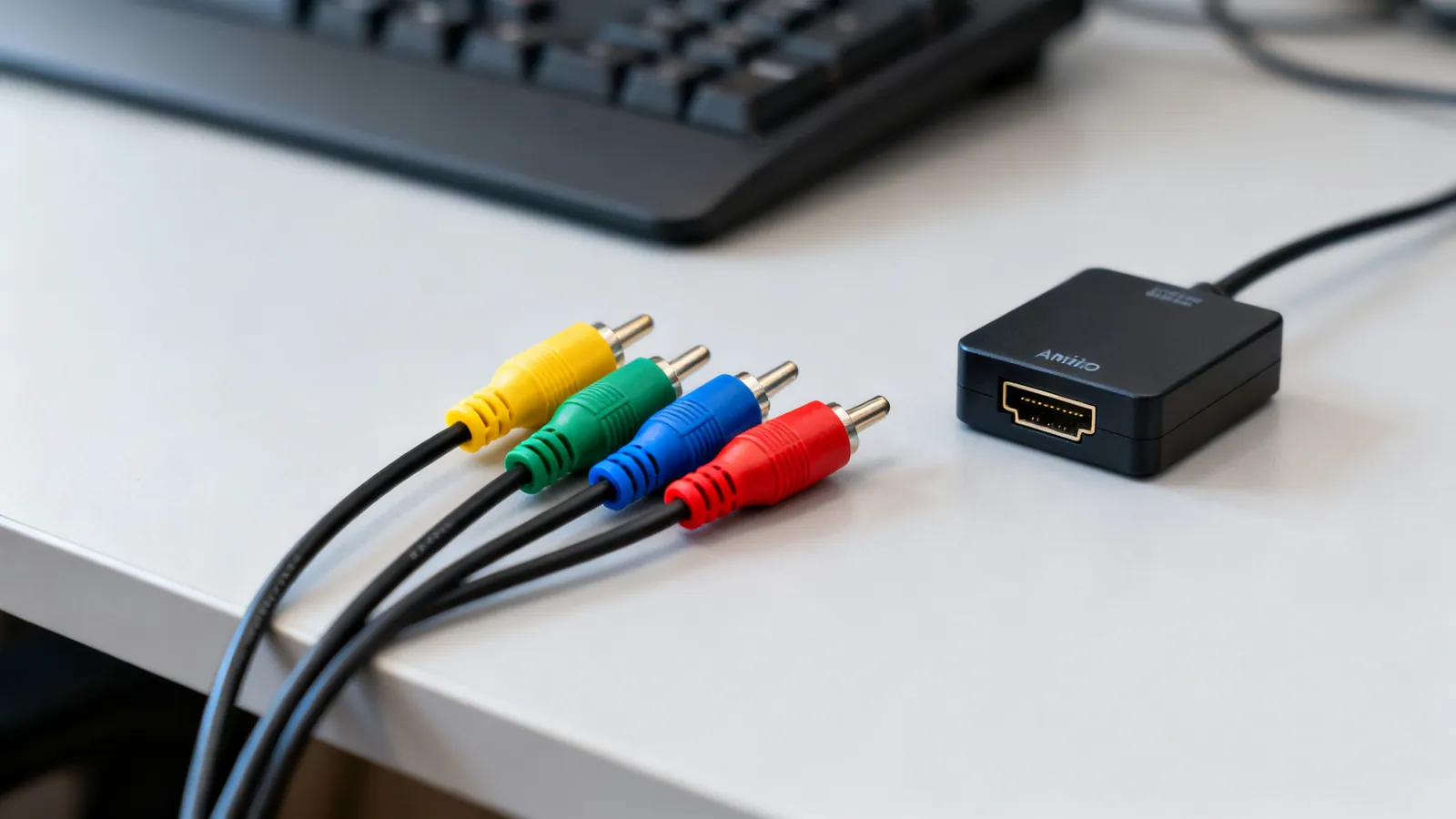
Composite vs Component Video: RCA Cables Compared
Composite and component video both use RCA plugs, but carry different signals. Compare resolution, connectors, S-Video and SCART, and adapters for old gear.
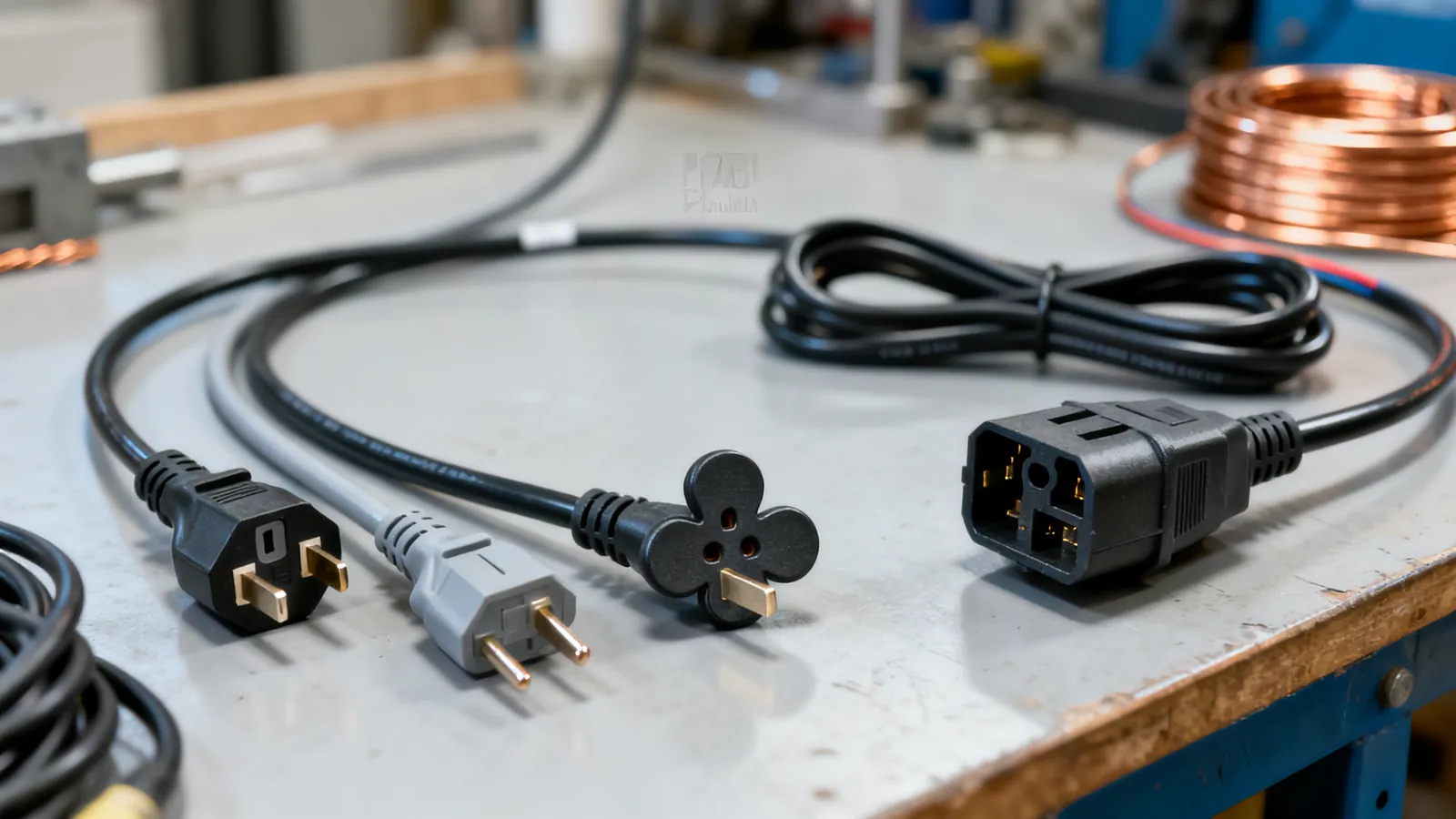
IEC Power Cord Types: C13, C5, C7 and C19
IEC 60320 couplers explained: C13 vs C14, C5 cloverleaf, C7 figure 8 and C19/C20. Ratings, plug ends, and how to pick a safe replacement cord.